Table of Contents >> Show >> Hide
- Quick Snapshot: What You’re Buying
- Why “Widespread” Matters (And When It Doesn’t)
- Build Quality: The “Heft Test” Is Not a Myth
- Flow Rate: The Quiet Power Move (and Why Listings Sometimes Disagree)
- Finishes: Where Newport Brass Really Flexes
- Installation: What to Expect (and What to Measure First)
- Care and Maintenance: Keep the Finish Looking Expensive
- Design Pairings: Making the 1660 Look Like It Belongs There
- Value and Availability: The Practical Reality
- Who Should Buy the Newport Brass 1660?
- What to Double-Check Before You Click “Buy”
- Real-World Experiences (500+ Words): Living With the Newport Brass 1660
Some bathroom upgrades shout for attentionfloor-to-ceiling tile, a chandelier that looks like it has a jewelry budget,
a vanity the size of a studio apartment. And then there’s the faucet: quietly doing the most, every single day,
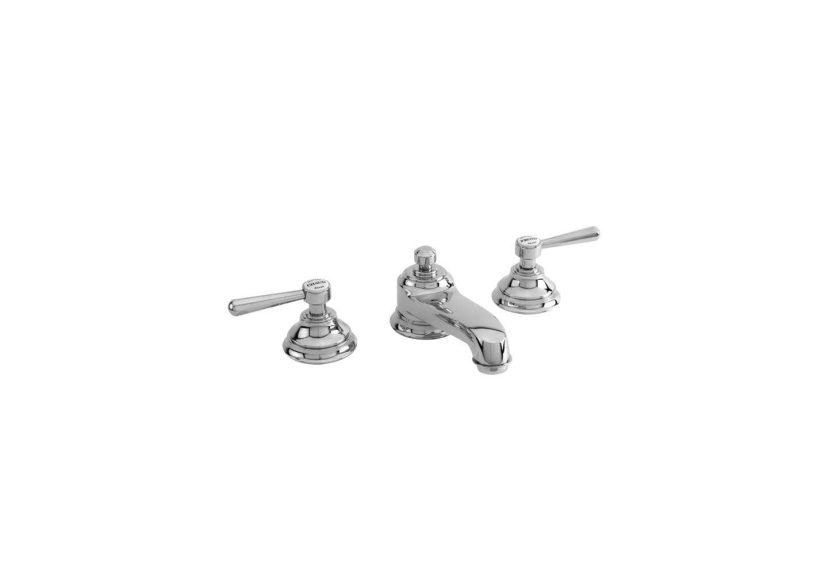
while asking for almost nothing in return. The Newport Brass 1660 widespread lavatory faucet sits in that sweet spot
where “daily workhorse” meets “yes, I do have taste.”
If you’re shopping this model, you’re probably already past the “is chrome okay?” stage. You want solid materials,
smooth handle action, a finish that won’t look like it gave up after three hand-washes, and a layout that works with
a true widespread sink deck. Let’s break down what the 1660 is, how it’s built, what it’s like to install,
and what you’ll actually notice once it’s living in your bathroom.
Quick Snapshot: What You’re Buying
The 1660 is a two-handle widespread lavatory faucetmeaning the spout and the two handles install as
separate pieces (typically in three holes). It’s commonly listed under Newport Brass’s Astaire family styling,
which leans traditional with a clean, composed silhouette.
| Spec / Feature | What It Means for You |
|---|---|
| Configuration: Widespread (3-hole) | Flexible placement and a “built-in” look on wider sink decks. |
| Spout reach: ~5.55″ (center-to-center) | Comfortable hand-washing zone without crowding the back of the sink. |
| Spout height at outlet: ~1.28″ | Low-to-mid outlet height; helps reduce splash on shallow basins. |
| Flow rate: up to ~1.2 GPM | Water-saving flow that still feels usable for hand washing and face rinsing. |
| Valve tech: Ceramic disc cartridges (quarter-turn) | Smooth operation and strong resistance to drips when installed correctly. |
| Material: Solid brass + brass valve bodies | Hefty feel, long-term durability, and better corrosion resistance than “lightweight” alloys. |
| Drain: Pop-up drain with tailpiece included | Less piecing-together; helps match finish across visible parts. |
| Compliance: cUPC / ASME / NSF / ADA (listed) | Meets common U.S. plumbing and accessibility expectations for residential use. |
Why “Widespread” Matters (And When It Doesn’t)
“Widespread” isn’t just a fancy way to say “expensive.” It’s a specific format: the spout and handles are separate,
and the spacing between the handles can often be adjusted to fit the sink deckcommonly for 8-inch centers,
with some flexibility depending on the model and sink.
When the 1660 is a great fit
- You have (or want) a three-hole sink or a vanity top drilled for widespread.
- Your sink deck has enough flat area around each hole for the escutcheons to sit cleanly.
- You like the “custom-installed” lookespecially on stone or solid-surface counters.
When you should pause
- Your sink is a single-hole or 4″ centerset layout (you’d be forcing a square peg into a round holeliterally).
- Your basin is very tight front-to-back and you’re worried about splash or knuckle space.
- You’re replacing a faucet and the existing holes don’t match a widespread layout.
Translation: widespread is fantastic when the sink deck supports it. When it doesn’t, it becomes an expensive lesson in geometry.
Build Quality: The “Heft Test” Is Not a Myth
Newport Brass is known for solid brass construction on many of its faucets, and the 1660 follows that pattern.
In real-life terms, that means you’ll notice:
- Weight: the components feel substantial in-hand (not hollow, not tinny).
- Finish depth: premium finishes tend to read “richer” under bathroom lighting.
- Mechanical smoothness: ceramic disc cartridges typically feel consistent, not gritty.
The 1660 is also commonly described with ADA-compliant lever handles. Beyond accessibility compliance,
that’s practical for everyone: you can operate it with a wrist, the side of a hand, or the “I’m holding a toothbrush and regret my choices”
grip.
Flow Rate: The Quiet Power Move (and Why Listings Sometimes Disagree)
Faucet flow is a surprisingly spicy topic in plumbing circles. The 1660 is often specified around 1.2 GPM,
which is below the long-standing national baseline many people grew up with.
What 1.2 GPM feels like day-to-day
- Hand washing: totally normal, especially with a good aerator stream.
- Face washing: workable, though it may feel slower if you’re used to a high-flow faucet.
- Filling a cup: finejust not instantaneous.
Why do some listings show higher numbers? Two common reasons: (1) older catalog data persists online longer than avocado toast trends,
and (2) some products ship with different flow options to meet state requirements. Several states adopted stricter rules than the
federal baseline, so manufacturers and retailers sometimes list the configuration most common in their market.
Finishes: Where Newport Brass Really Flexes
If you’ve ever tried to match “brushed nickel” across different brands and ended up with a bathroom that looks like it’s wearing
mismatched socks, you already understand why finish variety matters.
The 1660 is frequently listed with dozens of finish options (retailers may cite different counts depending on the catalog year).
Practically, this means you can match:
- your shower trim (without playing “close enough”)
- cabinet hardware (especially in warmer metals)
- lighting finishes (which always look slightly different at night, because lighting enjoys chaos)
A quick finish decision guide
- Polished Chrome: bright, classic, easiest to coordinate, and forgiving in resale.
- Polished Nickel: warmer than chrome, more “jewelry-like,” great in traditional spaces.
- Oil Rubbed Bronze: a moody, traditional look that can visually anchor a light vanity top.
- PVD finishes: often chosen for durabilityhelpful if you want less worry about micro-scratches over time.
Want a designer trick without the designer invoice? Consider a two-tone approach (for example, a warm base with a contrasting accent).
Newport Brass also promotes curated split-finish approaches for select models, which can make “custom” feel more achievable.
Installation: What to Expect (and What to Measure First)
Widespread faucets aren’t “hard,” but they are more “parts on the counter” than a single-hole faucet.
Newport Brass installation guidance commonly recommends professional installationespecially if you’re pairing it with stone counters
or high-end sinks where mistakes are… memorable.
Before you install: the three checks that prevent 90% of headaches
- Hole size and spacing: confirm your sink/counter drilling matches the faucet’s widespread requirements.
- Deck thickness: make sure the valve bodies and mounting hardware will clamp securely.
- Supply line compatibility: verify shutoff valves and risers (and plan for replacements if they’re old).
A realistic step-by-step overview
- Install the spout with the escutcheon seated flat (use appropriate sealantskip petroleum-based putty if the manufacturer warns against it).
- Set the valve bodies under the handle holes, align outlets toward the center, then tighten.
- Connect hoses from valves to spout assembly; tighten carefully (hand-tight plus a small wrench turn is common practice).
- Connect supplies to the valve bodies using your chosen riser type.
- Install handles and trim, aligning properly so operation is smooth and finish is protected.
- Install the pop-up drain (flange, washers, tailpiece), then connect linkage.
- Flush the lines with the aerator removed, then reinstall aerator and test for leaks.
Pro tip that saves frustration: take a photo of the drain linkage orientation before you tighten everything.
Pop-up drains are simple, but they love to pretend they’re not.
Care and Maintenance: Keep the Finish Looking Expensive
Most premium faucets don’t fail because the metal “gave up.” They fail because the finish gets attacked by harsh cleaners,
or debris chews up the cartridge during a rushed installation.
Finish-friendly cleaning
- Use a soft cloth with water and mild soap when needed.
- Avoid abrasive cleaners and polishes (they can dull or scratch finishes).
- Dry after heavy splashing if your water is hard and spots drive you nuts.
Drip prevention basics
- Flush supply lines during install to reduce debris risk.
- Don’t overtighten connectionsleaks come from both loose fittings and damaged seals.
- If you have very hard water, consider periodic aerator cleaning to keep flow consistent.
Design Pairings: Making the 1660 Look Like It Belongs There
The 1660’s styling works best when the rest of the bath is aiming for “classic, but not fussy.”
Here are a few easy wins:
Example 1: Traditional vanity, modern edge
Pair polished nickel with a white quartz top and simple framed mirror. Add black or aged-brass cabinet pulls for contrast.
The faucet reads classic, but the overall space doesn’t look like it’s cosplaying a Victorian parlor.
Example 2: Warm, spa-like neutrals
Choose a warmer finish (bronze or a gold tone) with a beige or limestone-look tile. The faucet becomes a focal point,
and you don’t need a dozen accessories fighting for attention.
Example 3: High-contrast statement
Use a darker finish against a white console sink or bright countertop. Keep the lighting simple so the faucet’s silhouette
stays crisp and intentional.
Value and Availability: The Practical Reality
Premium faucets don’t live in the “add to cart and forget it” aisle. Availability can vary by finish, and some sellers may show
certain combinations as special order. You’ll also see different status notes depending on the retailersometimes even labeling
specific configurations as discontinued while others remain orderable.
Price also moves with finishes and market timing. A helpful way to think about it: you’re paying for solid materials,
finish selection, and a brand positioned in the high-end fixture worldnot just “water comes out.”
Who Should Buy the Newport Brass 1660?
- Yes, if you want a widespread faucet with strong material quality and a designer-level finish menu.
- Yes, if you care about long-term feel: smooth handles, stable mounting, and a “built right” vibe.
- Maybe, if you’re renovating on a tight deadline and can’t wait on special-order finishes.
- Maybe, if you strongly prefer a higher flow feel for face washing (though many people adapt quickly to efficient flow).
What to Double-Check Before You Click “Buy”
- Hole spacing and deck layout (widespread means separate spout + handles).
- Finish code (make sure it matches the rest of your bathroom planespecially if mixing brands).
- Drain compatibility (pop-up included, but confirm sink drain size and overflow requirements).
- Lead-time expectations (premium finishes can be made-to-order).
- Local flow rules (some regions have strict maximum flow standards; confirm you’re aligned).
Real-World Experiences (500+ Words): Living With the Newport Brass 1660
Specs are comforting, but “How does it feel on a Tuesday morning when you’re late?” is the question that actually matters.
Below are experience-style scenarios based on common homeowner priorities, installer routines, and the kinds of things people
notice after the new-faucet honeymoon ends (yes, that’s a real phaseright after “I keep turning it on just because it’s smooth”).
1) The “I wanted luxury, not drama” remodel
In a primary bath refresh, the 1660 tends to win people over with its physical presence. The handles feel deliberate,
not flimsy, and the spout doesn’t wobble when you use it (which is a weirdly common complaint with lighter faucets).
When paired with a stone countertop, the widespread layout looks intentionallike the faucet was chosen for the vanity,
not grabbed in a panic at the last minute. The biggest day-to-day “aha” is often how tidy the deck looks: the separate pieces
visually balance wide sinks and give breathing room around the spout, especially if you’re the type who keeps soap, skincare,
and a toothbrush cup nearby. The faucet reads upscale without screaming, “Hello, I cost more than your first car payment.”
2) The “install went great… after we measured twice” story
Widespread installs can be smoothespecially when the sink drilling and deck thickness are confirmed ahead of time.
Installers often appreciate integrated hose setups because they reduce awkward reach and unnecessary joints under the sink.
The most common snag isn’t the faucet itself; it’s the under-sink reality: old shutoff valves that should have been replaced years ago,
supply lines that don’t match what’s needed, or a vanity cabinet that leaves about six square inches of working space.
People who plan for those variables (new shutoffs, fresh risers, a little patience for the drain linkage) usually describe the install as straightforward.
People who don’t plan for them describe it as “character building.” Either way, once everything is tightened and flushed properly,
the faucet tends to reward the effort with stable operation and clean lines.
3) The “Is 1.2 GPM enough?” adjustment period
If you’re coming from an older, higher-flow faucet, the first impression of efficient flow can be, “Is it… shy?”
But most users adapt quickly because the aerated stream still feels substantial for hand washing. What changes is the timing
for small tasks: filling a wide-mouth bottle might take a few extra seconds, and rinsing thick cleanser off your hands might
mean you keep your hands under the stream just a bit longer. The upside is subtle but real: less splash on shallow sinks,
less water running down your wrists, and (in many households) less “Why is our hot water always running?” energy.
If you’re the kind of person who wants a faucet to feel powerful, you may care more about stream quality than raw GPM
and a well-designed aerator can make efficient flow feel surprisingly satisfying.
4) Finish reality: what looks gorgeous in photos vs. what you live with
In real bathrooms, the finish choice can matter as much as the faucet model. Polished surfaces pop under vanity lighting,
but they can show water spots depending on your water hardness. Darker finishes can hide spots yet show dust or soap film
if your countertop tends to collect it. Homeowners who are happiest long-term usually pick finishes based on their
cleaning tolerance and the rest of the roomnot just the showroom wow factor. If you love the look of warm metals but worry about longevity,
people often gravitate toward tougher coating types where available. And for design-focused spaces, two-tone looks can feel custom
without requiring a full bespoke metalwork saga. The consistent theme in positive experiences is this: when the finish matches the plan,
the faucet stops being “the new thing” and becomes part of the room’s identity.
5) Long-term satisfaction: the little things people mention months later
After the excitement fades, users tend to mention the same practical wins: the handles stay smooth, the faucet feels stable,
and the styling doesn’t age quickly. The 1660’s traditional-leaning design is less likely to look dated in five years than
ultra-trendy shapes. People also appreciate when a faucet includes the drain assembly because it reduces mismatched finishes
and “almost the same” metal tones. On the maintenance side, the biggest lesson is simple: treat the finish kindly, flush lines at install,
and don’t let harsh cleaners turn a premium faucet into a science experiment. Do that, and the 1660 tends to feel like
one of those upgrades you stop thinking aboutwhich, in bathroom-land, is the highest compliment.