Table of Contents >> Show >> Hide
- Before You Start: Know What Kind of Leather You Have
- Way 1: Do a Gentle Surface Clean for Everyday Dirt
- Way 2: Spot-Clean Stains, Body Oil, and Problem Areas
- Way 3: Get Professional Cleaning for Deep Soil, Delicate Leather, or Valuable Jackets
- How to Dry, Condition, and Finish the Jacket After Cleaning
- How to Store a Leather Jacket So It Stays Clean Longer
- Common Mistakes That Ruin Leather Jackets
- Final Thoughts
- Experiences and Lessons From Cleaning Leather Jackets
A leather jacket is one of those rare pieces in a closet that can make you look cooler than you actually feel. It can dress up jeans, rescue a boring outfit, and survive trends that come and go faster than bad haircuts. But leather also has one dramatic personality trait: it hates being cleaned the wrong way.
That is why learning how to clean a leather jacket matters. Use too much water, and the jacket may stiffen or lose shape. Rub too hard, and you can dull the finish. Toss it in the washing machine, and you may accidentally turn your favorite jacket into an expensive cautionary tale. The good news is that most leather jackets do not need complicated care. They need gentle handling, the right method, and a little patience.
In this guide, you will learn three practical ways to clean a leather jacket, when to use each method, what mistakes to avoid, and how to dry, condition, and store your jacket so it stays soft, sharp, and ready for action.
Before You Start: Know What Kind of Leather You Have
Before you grab a cloth and declare war on that mystery stain, pause for thirty seconds. Not all leather jackets are created equal. A smooth, finished moto jacket can usually handle light at-home cleaning. A delicate lambskin jacket, vintage piece, suede jacket, or heavily distressed style may need more caution or professional care.
Check the care label first
The care label is not there for decoration. It may tell you whether the jacket is safe for light spot cleaning, whether it should only be professionally cleaned, or whether there are special finish treatments that need extra care.
Do a spot test
Whatever product or soap solution you use, test it first on a hidden area such as the inside hem, under the collar, or near an inside seam. Leather can react differently depending on dye, finish, age, and wear.
Know the basic “do not even think about it” list
Do not soak the jacket. Do not machine wash it. Do not blast it with a hair dryer. Do not place it in direct sunlight to dry. And do not scrub it like you are trying to erase a regrettable tattoo from a picnic table.
Way 1: Do a Gentle Surface Clean for Everyday Dirt
This is the best method for regular maintenance. If your jacket looks a little dusty, dull around the collar, or mildly grimy after lots of wear, a gentle surface clean can freshen it up without stressing the leather.
When this method works best
Use this approach for light dirt, small smudges, surface dust, and general dinginess. It is ideal for jackets worn often during cooler months, especially if they spend time in city air, crowded closets, or the backseat of your car where all good outerwear goes to question its life choices.
What you need
A soft microfiber cloth or sponge, a second clean cloth, lukewarm water, and a tiny amount of mild dish soap or neutral soap. You can also use a leather cleaner made specifically for finished leather garments.
How to do it
First, wipe the jacket with a dry soft cloth or soft brush to remove loose dust. This step matters more than people think. If you skip it, you risk dragging grit across the surface and creating tiny scratches that make the leather look tired.
Next, mix a very small amount of mild soap into lukewarm water. Dip just one corner of your cloth into the solution and wring it out well. The cloth should be damp, not wet. Think “morning dew,” not “survived a monsoon.”
Gently wipe the jacket in small circular motions or light passes, focusing on visibly dirty areas. Work section by section. Do not flood the leather. Do not press aggressively. Leather responds best to persuasion, not force.
Once the dirt lifts, take a second cloth dampened with plain water and wipe away any soap residue. Then blot with a dry towel and hang the jacket on a padded or wide hanger in a well-ventilated room.
This method is simple, safe for many finished leather jackets, and useful as a routine cleaning habit. If you wear your jacket frequently, a light surface clean from time to time can prevent dirt buildup that later requires more aggressive treatment.
Way 2: Spot-Clean Stains, Body Oil, and Problem Areas
Some messes do not deserve a full-jacket cleaning. They deserve a targeted response. Spot cleaning is your go-to method for collar discoloration, cuff grime, underarm buildup, light food splashes, and other small stains that appear exactly where you hoped no one would look.
Best areas to check first
The collar, cuffs, zipper placket, pocket edges, and underarms usually show dirt first. These are the high-contact zones where skin oil, sweat, cosmetics, and daily wear quietly collect until one day the jacket starts looking less “rugged” and more “forgotten on a chair for six months.”
How to spot-clean safely
Use a soft cloth with a tiny amount of diluted mild soap or a leather-specific cleaner. Blot the stain gently instead of rubbing it hard. Blotting helps lift grime while reducing the chance of damaging the finish or creating a darker water ring.
If the stain is fresh, act quickly. A recent spill is much easier to treat than one that has had time to settle into the leather. For example, if you splash coffee on the sleeve while trying to look composed during a meeting, dab it right away with a clean dry cloth before it becomes a permanent memory.
What about grease or oil stains?
Grease is trickier. If the stain is fresh, blot off as much as possible with a dry cloth. Avoid rubbing. Some people use absorbent powders for fresh oil marks, but results vary depending on the leather finish and dye. On a cheap, sturdy jacket you may be willing to experiment carefully after a spot test. On a favorite lambskin jacket or a vintage find, this is the moment to stop improvising and call a leather specialist.
What about odors?
If the jacket smells musty or stale, do not reach for heavy perfume, fabric refresher, or random internet potion number seven. Start by airing it out in a cool, dry, well-ventilated room away from direct sunlight. Clean the lining area lightly if the care label allows it, and focus on the collar and underarms, where odors tend to linger. For stubborn smells, professional cleaning is usually the smarter move.
When spot cleaning is not enough
If the stain has spread, darkened the leather unevenly, or changed the finish, do not keep reworking the same area for an hour like stubbornness is a cleaning tool. That usually makes things worse. Deep stains, ink marks, mold, or anything on delicate leather should be handled professionally.
Way 3: Get Professional Cleaning for Deep Soil, Delicate Leather, or Valuable Jackets
Sometimes the best cleaning method is knowing when not to do it yourself. Professional cleaning is the third and often smartest way to clean a leather jacket, especially when the garment is expensive, vintage, heavily stained, lined with special materials, or made from delicate leather such as lambskin, suede, or nubuck.
When to go pro
Choose a professional leather cleaner if your jacket has large stains, widespread grime, mold, strong odor, color loss, stiffness after getting wet, or a label that says professional leather clean only. This also makes sense if the jacket has sentimental value. A leather jacket inherited from a parent, rescued from a vintage shop, or bought after months of saving deserves better than reckless kitchen-sink science.
Why a specialist matters
Not every cleaner is a leather expert. A cleaner experienced with leather garments understands how dyes, finishes, oils, and liners behave. They are better equipped to clean the jacket while preserving color, flexibility, and structure. That matters because leather is not just fabric with attitude. It is a natural material that can dry out, distort, or discolor when treated carelessly.
Professional cleaning is not “giving up”
It is actually the opposite. It is the move of someone who would like to keep a good jacket looking good for years. There is no trophy for removing a mystery stain with toothpaste, panic, and excessive confidence.
How to Dry, Condition, and Finish the Jacket After Cleaning
Cleaning is only half the job. What you do afterward is what helps the jacket stay soft and wearable instead of stiff and sad.
Let it air-dry naturally
After any cleaning, blot off excess moisture and hang the jacket on a padded, wide, or wooden hanger. Let it dry naturally in a room with good airflow. Keep it away from direct sunlight, radiators, heating vents, and hair dryers. High heat can dry the leather too fast and leave it brittle or warped.
Condition the leather
Once the jacket is dry, apply a small amount of leather conditioner if the leather type and product instructions allow it. Conditioning helps restore softness and reduce the risk of drying and cracking. Use a thin layer, work it in gently, and avoid overdoing it. A leather jacket should feel supple, not like it has been frosted for a birthday party.
Buff lightly
After the conditioner absorbs, buff the jacket with a clean soft cloth. This helps even out the finish and gives the leather a healthy, polished look without making it shiny in an unnatural way.
How to Store a Leather Jacket So It Stays Clean Longer
Good storage is part of leather jacket care. In fact, a lot of future cleaning problems begin in closets where jackets are crushed, folded, overheated, or trapped in plastic covers like they are being punished for existing.
Use the right hanger
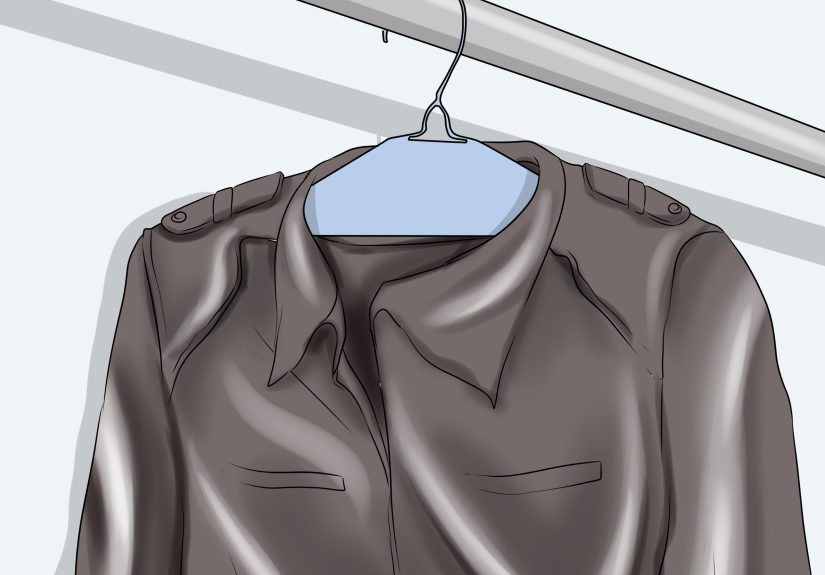
Always hang a leather jacket on a sturdy, shaped hanger. Thin wire hangers can distort the shoulders. Folding the jacket can leave creases that are difficult to remove.
Give it breathing room
Store the jacket in a cool, dry, well-ventilated area. Use a breathable garment bag or cotton cover if you want protection from dust. Avoid plastic, which can trap moisture and interfere with the leather’s ability to breathe.
Prep it for long-term storage
If you are putting the jacket away for the season, make sure it is clean first. Storing leather with body oil, stains, or moisture still on it is basically sending grime on a long vacation with your jacket. For extra structure, lightly stuff the inside with acid-free paper if needed.
Common Mistakes That Ruin Leather Jackets
Even well-meaning people can damage leather by trying too hard. Here are the biggest mistakes to avoid:
Machine washing: It can strip natural oils, distort the shape, and damage the finish.
Using too much water: Leather does not want a bath. It wants a careful wipe-down.
Scrubbing aggressively: Hard rubbing can create dull spots, remove dye, or leave marks.
Drying with heat: Fast heat often leads to cracking and stiffness.
Skipping conditioner: After cleaning, leather may need moisture restored.
Ignoring the care label: The tag often tells you whether the jacket should stay out of DIY territory.
Final Thoughts
If you remember nothing else, remember this: the best way to clean a leather jacket is gently. Start with the least aggressive method, keep moisture low, dry it naturally, and condition it when needed. For everyday wear, a surface clean is often enough. For collars, cuffs, and small stains, spot cleaning does the job. For deep grime, fragile leather, or a jacket you truly love, professional leather cleaning is worth every penny.
A great leather jacket gets better with age, but only if it survives your cleaning decisions. Treat it well, and it will return the favor for years with that perfect broken-in look that no fast-fashion imitation can fake.
Experiences and Lessons From Cleaning Leather Jackets
People usually learn leather care in one of two ways: from good advice or from one mildly traumatic mistake. The first time many jacket owners clean leather, they are nervous for a reason. Leather is expensive, emotional, and strangely capable of making you feel guilty for touching it with the wrong cloth.
One common experience happens after a rainy commute. A jacket gets damp, dries stiff in one sleeve, and suddenly the owner realizes that leather is not as low-maintenance as denim. What often works in that situation is simple patience. Letting the jacket air-dry fully, then conditioning it lightly, usually brings back flexibility better than trying to “fix” it with heat. That lesson sticks because it turns panic into respect for the material.
Another familiar story involves the collar. Someone wears the same leather jacket all fall, hangs it up proudly, and months later notices a dark ring around the neckline that did not exist before. The good news is that this kind of buildup often responds well to careful spot cleaning. The better lesson is preventative: quick wipe-downs after frequent wear are easier than waiting until the dirt becomes a project.
Vintage jackets teach a different kind of wisdom. A thrifted leather jacket may look amazing on the rack and smell like a history book in a basement when you get it home. In those cases, people often discover that not every problem should be solved with DIY enthusiasm. Airing it out can help a little, but strong odor, age-related dryness, or mystery stains often call for a professional cleaner. The experience teaches restraint, which is not glamorous, but it is effective.
Then there is the overconfident cleaner experience. This person starts with a small stain and ends up cleaning half the jacket because the spot now looks different from the rest of the leather. That usually happens when too much water is used or one area is rubbed too aggressively. The lesson here is to clean evenly, use minimal moisture, and stop early if the leather starts reacting badly. Leather rewards calm behavior. It punishes overcorrection.
Some of the best experiences come from building a simple routine. Owners who regularly brush off dust, wipe down cuffs and collars, use a proper hanger, and condition the jacket once in a while rarely face dramatic cleaning disasters. Their jackets age well, develop character, and keep that soft, lived-in feel that makes leather so appealing in the first place.
In the end, cleaning a leather jacket is less about chasing perfection and more about preserving personality. Scuffs, grain variation, and a bit of wear can look great. Neglect, stiffness, and grime usually do not. The most useful experience people gain is learning the difference. Once you understand that, leather care becomes much less intimidating and a lot more practical.