Table of Contents >> Show >> Hide
- Criminal Law Myths That TV Helped Popularize
- 1. “If police don’t read you your Miranda rights, your case is automatically thrown out.”
- 2. “Police must read Miranda rights the instant the handcuffs go on.”
- 3. “Entrapment means police gave you the opportunity to commit a crime.”
- 4. “The victim decides whether to press charges or drop them.”
- 5. “Hearsay is never allowed in court.”
- 6. “You can’t be convicted on circumstantial evidence.”
- Contract and Civil Law Myths That Cause Everyday Trouble
- 7. “Verbal contracts are never enforceable.”
- 8. “Texts, emails, and e-signatures don’t count as real contracts.”
- 9. “If you live together long enough, you’re automatically married under common law.”
- 10. “If you win a lawsuit, the other side always pays your lawyer.”
- 11. “Lawsuits usually end in giant cash windfalls and punitive damages.”
- Copyright Myths the Internet Keeps Recycling
- 12. “Giving credit makes copyright infringement legal.”
- 13. “Fair use has a magic number of seconds, words, or percentage.”
- 14. “If it’s for school, teaching, or nonprofit use, it’s automatically fair use.”
- 15. “You can copyright an idea, title, name, or slogan.”
- 16. “Your work isn’t copyrighted until you register itor mail it to yourself.”
- 17. “Anything posted online is public domain.”
- Defamation Myths That Need a Better Fact-Checker
- Workplace Law Myths That Employers and Employees Both Repeat
- Consumer-Life Myths That Can Cost Real Money
- What These Legal Myths Look Like in Real Life
- Conclusion
American law has a public-relations problem. A lot of people learn their “legal facts” from courtroom dramas, chain emails, dramatic Facebook posts, the cousin who is “pretty sure” he knows his rights, and that one guy at work who says everything with the confidence of a retired Supreme Court justice. The result? A whole museum of legal myths that get repeated so often they start to sound true.
This is where things get expensive, awkward, and occasionally handcuffed. Some myths about the law are harmless party trivia. Others can wreck a contract, torpedo a lawsuit, cost someone overtime pay, or convince a person to ignore a serious scam because they think they already know how the system works. And because U.S. law is a patchwork of federal rules, state rules, court decisions, and exceptions, the real answer is often less cinematic and more “well, it depends.”
Below are 23 common legal misconceptions that refuse to die. Some are half-truths in bad wigs. Others are pure fiction wearing a necktie. Either way, they are worth retiring.
Criminal Law Myths That TV Helped Popularize
1. “If police don’t read you your Miranda rights, your case is automatically thrown out.”
Nope. That is one of the most durable myths about the law. Miranda warnings matter during custodial interrogation, not as a magic spell that makes a criminal case disappear. If police violate Miranda, the usual consequence is that certain statements may be excluded from evidence. It does not mean the arrest vanishes, the prosecution evaporates, or the judge dramatically announces, “Well folks, pack it up.”
2. “Police must read Miranda rights the instant the handcuffs go on.”
Also false. The requirement is tied to custodial interrogation, not the exact moment of arrest. Police do not have to chant Miranda like a legal theme song the second someone is detained. They must generally give the warning before questioning a person who is in custody. That distinction matters, and it is one reason TV has probably done more for Miranda confusion than for fashion.
3. “Entrapment means police gave you the opportunity to commit a crime.”
Not quite. Entrapment is narrower than “they let me do it.” In many jurisdictions, the defense focuses on whether law enforcement induced a person to commit a crime they otherwise would not have committed. Giving someone an opportunity, running a sting, or waiting for a willing person to take the bait is not automatically entrapment. The law cares about inducement, predisposition, and the facts on the ground.
4. “The victim decides whether to press charges or drop them.”
In criminal cases, that is usually not how it works. Prosecutors decide whether to file charges, what charges to file, and whether to continue with a case. A victim’s wishes may matter a great deal as a practical matter, but the case belongs to the state, not to a private individual. So when people say, “I’m dropping the charges,” they are often describing a movie plot, not the criminal justice system.
5. “Hearsay is never allowed in court.”
This myth survives because the real rule is less catchy. Hearsay is generally inadmissible when offered for the truth of the matter asserted, but there are many exceptions and exclusions. In other words, “hearsay is never allowed” is a little like saying umbrellas are illegal because it sometimes rains indoors. The law of evidence is packed with nuance, and hearsay is one of its favorite playgrounds.
6. “You can’t be convicted on circumstantial evidence.”
False again. Circumstantial evidence is still evidence. It asks the fact-finder to make a reasonable inference from proven facts, and courts do not treat it as fake evidence, discount evidence, or evidence with a sad trombone sound effect. In many real cases, circumstantial evidence is powerful. The law does not require a neon sign saying “guilty” or a witness who saw everything from three feet away.
Contract and Civil Law Myths That Cause Everyday Trouble
7. “Verbal contracts are never enforceable.”
That is one of the most common legal misconceptions in America. Oral agreements can absolutely be enforceable. The catch is that some categories of agreements must be in writing under statutes of frauds, and proving the terms of an oral deal can be a headache worthy of its own billing entry. So the better rule is this: verbal contracts are not automatically worthless, but written ones are usually much easier to prove.
8. “Texts, emails, and e-signatures don’t count as real contracts.”
Modern commerce would like a word. Electronic records and signatures can carry legal effect. In many situations, a contract cannot be denied validity simply because it was created or signed electronically. That means a sloppy string of texts can become a very real problem if the required elements of a contract are there. The medium changed; contract law did not move into a cave.
9. “If you live together long enough, you’re automatically married under common law.”
No magical timeline exists. Common-law marriage is recognized only in some jurisdictions, and it generally requires more than sharing rent, toothpaste, and a streaming password. Depending on the state, it may require mutual intent to be married and holding yourselves out to the public as a married couple. So no, seven years on a couch does not automatically produce a spouse.
10. “If you win a lawsuit, the other side always pays your lawyer.”
Usually not. Under the American Rule, each side typically pays its own attorney’s fees unless a statute, contract, or specific rule says otherwise. This surprises people who assume litigation works like a game show where the loser funds the winner’s legal bill and emotional recovery. Sometimes fee-shifting exists. Often it does not. That little detail can shape whether a lawsuit makes financial sense in the first place.
11. “Lawsuits usually end in giant cash windfalls and punitive damages.”
The legal system is not a slot machine. Damages are usually meant to compensate an injured party, not to shower them with cinematic wealth. Punitive damages can exist, but they are typically reserved for especially harmful conduct and are not routine. Plenty of cases settle modestly. Plenty result in limited compensation. And plenty become expensive marathons where nobody feels like a winner except maybe the copier repair technician.
Copyright Myths the Internet Keeps Recycling
12. “Giving credit makes copyright infringement legal.”
Attribution is polite. It is not a universal legal defense. Saying “credit to the owner” does not automatically excuse copying someone else’s protected work. Permission, license, fair use, public domain status, or another valid defense is what matters. A caption that says “no copyright intended” has the legal force of a shrug.
13. “Fair use has a magic number of seconds, words, or percentage.”
There is no universal legal quota that says five seconds is safe, thirty words are blessed, or ten percent is the official snack-size infringement exemption. Fair use is a case-by-case analysis. Courts weigh multiple factors, including purpose, amount used, and market effect. That is frustrating if you were hoping for a tidy ruler. It is also reality.
14. “If it’s for school, teaching, or nonprofit use, it’s automatically fair use.”
Not automatically. Educational and nonprofit purposes can help in a fair use analysis, but they do not guarantee victory. Courts still look at the other factors, including how much was taken and whether the use harms the market for the original. “But it was for class” is a stronger argument than “I just felt inspired,” but it is not a get-out-of-copyright-free card.
15. “You can copyright an idea, title, name, or slogan.”
Not under ordinary copyright rules. Copyright protects original expression, not raw ideas, facts, systems, names, titles, or short phrases. That is why people mix up copyright with trademark law all the time. If you have a brilliant idea for a podcast called Lawyer Up, Buttercup, copyright does not protect the idea alone. The actual creative expression does the heavy lifting.
16. “Your work isn’t copyrighted until you register itor mail it to yourself.”
This myth deserves a Viking funeral. In the United States, copyright protection generally exists as soon as an original work is fixed in a tangible form. Registration brings important benefits, especially for enforcement, but it is not what creates the copyright in the first place. And the so-called “poor man’s copyright” of mailing yourself a copy? That is not the legal cheat code people think it is.
17. “Anything posted online is public domain.”
Not even close. Something can be publicly visible and still fully protected by copyright. “Public domain” has a specific meaning: the work is no longer under copyright protection or never qualified for it. The internet is not a giant free bin marked “take one.” If a photo, article, graphic, or video is online, that does not mean it is yours for the taking.
Defamation Myths That Need a Better Fact-Checker
18. “Defamation only means written lies.”
Nope. Written defamation is libel, but spoken defamation is slander. The broader concept is defamation, and it covers reputational harm from false statements in more than one form. So the person who loudly spreads a false accusation at a cookout is not protected just because they skipped the keyboard.
19. “A statement can still be defamation even if it’s true.”
As a general rule, truth is a complete defense to defamation. That does not mean every ugly truth is consequence-free in every other legal context, but defamation law is aimed at false statements that harm reputation. So “it embarrassed me” and “it was defamation” are not interchangeable phrases, even though social media regularly treats them like identical twins.
Workplace Law Myths That Employers and Employees Both Repeat
20. “Salaried employees never get overtime, and job titles decide everything.”
Being paid a salary does not automatically remove overtime rights. Under federal law, exemptions often depend on both salary and job duties. Titles alone do not determine exempt status. Calling someone a “manager,” “administrator,” or “operations wizard” does not magically erase wage-and-hour protections. The law looks at what the employee actually does, not just what the business card says.
21. “At-will employment means your employer can fire you for absolutely any reason.”
At-will employment is broad, but it is not lawless. Employers generally cannot fire workers for illegal discriminatory reasons, retaliation, or other prohibited grounds. In other words, “at will” does not mean “whatever chaos I can think up before lunch.” The doctrine gives employers flexibility, but it does not cancel civil rights laws or retaliation protections.
Consumer-Life Myths That Can Cost Real Money
22. “Debt collectors can threaten arrest or contact you whenever they feel like it.”
Wrong. Federal law limits how and when debt collectors can contact consumers about covered debts, and collectors cannot threaten arrest just because a debt is unpaid. They cannot call at all hours, and they cannot casually behave like a low-budget movie villain. The law is not a force field against collection efforts, but it does place real boundaries on abusive or deceptive conduct.
23. “If you miss jury duty, the court will call and demand money to make it go away.”
That one is less a legal fact than a scammer’s favorite script. Fraudsters often impersonate court officials or law enforcement, claim someone missed jury service, and demand immediate payment to avoid arrest. Real courts do not run like ransom hotlines. If you get a high-pressure call demanding fast money, gift cards, or prepaid cards to “fix” jury duty, alarms should be going off in your head like a courthouse fire drill.
What These Legal Myths Look Like in Real Life
Legal myths survive because they usually sound just plausible enough to feel useful. Picture a small-business owner who makes a handshake deal with a contractor, then later insists, “It’s not enforceable because nothing was signed.” That belief can feel comforting right up until emails, texts, performance, and witness testimony start painting a different picture. Suddenly the “informal” deal looks very formal in court.
Or imagine an employee who has been working fifty-hour weeks on a salary and never questions overtime because a supervisor once said, “Salaried people don’t get overtime, that’s just how it works.” Months pass. Maybe years. The employee repeats the myth to newer hires, and the myth becomes office folklore. Then one day somebody looks at the actual duties test, and the company realizes the job title was doing a lot of dramatic acting and not much legal work.
Copyright myths are even sneakier because the internet rewards confidence more than accuracy. A creator spends days making an original guide, infographic, or video. Someone else reposts it with “credit to original owner” and genuinely thinks that solves everything. Another person says it is fine because only twenty seconds were used. A third says it is for education, so obviously it must be fair use. By the time the creator finds it, the myth has multiplied like rabbits with Wi-Fi.
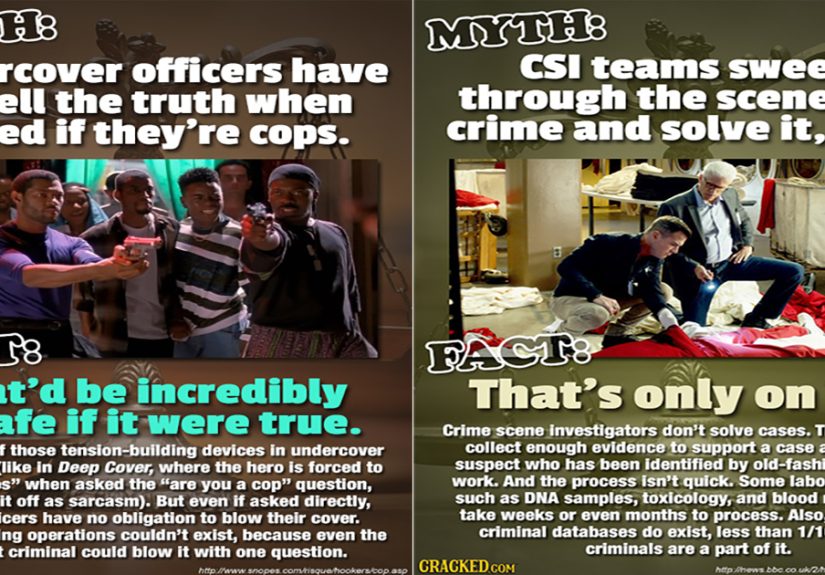
Criminal-law myths can be even more damaging. A person who thinks a missing Miranda warning makes a whole case disappear may talk too freely because they assume the prosecution is already doomed. Someone else may think a victim controls charges and pressure that person to “drop the case,” not realizing prosecutors make the legal call. And people raised on detective shows often expect every case to come with a smoking gun, DNA, a surprise confession, and a dramatic overhead spotlight. Real life is usually less glamorous and more document-heavy.
Then there are the myths that scammers love. A phone call about missed jury duty sounds terrifying because it piggybacks on a real civic obligation. A fake debt collector sounds convincing because people know debts can lead to lawsuits and garnishment. Scammers do not invent fear from scratch; they borrow legal-sounding fragments and let panic do the rest. That is why knowing the difference between a legal rule and a legal rumor matters so much. The myth is rarely just bad trivia. Sometimes it is the bait.
The larger lesson is simple: the law hates shortcuts. It rarely rewards slogans like “always,” “never,” or “every time.” If a legal claim sounds too neat, too dramatic, or too perfect for a TV monologue, it probably deserves a second look. The safest habit is not memorizing catchy fake rules. It is learning to distrust them.
Conclusion
The biggest myth about the law may be that it comes in tidy one-line answers. In reality, U.S. law is full of conditions, exceptions, burdens of proof, jurisdiction differences, and deeply unromantic details. That is exactly why legal myths travel so well: they are simpler than the truth. But simple is not the same thing as accurate.
From Miranda warnings and hearsay to common-law marriage, copyright, overtime, and debt collection, these myths keep circulating because they are memorable, not because they are right. The smarter move is to treat viral “legal facts” the same way you would treat a suspicious text from an unknown number: don’t trust it just because it sounds official. State law can vary, but one rule travels well everywhere: verify first, repeat later.