Table of Contents >> Show >> Hide
Disney has given the world talking animals, wishing stars, glass slippers, and enough catchy songs to live in your head rent-free for decades. But let’s be honest: a huge chunk of the magic comes from the villains. Heroes may get the happy endings, but the bad guys usually get the best entrances, the sharpest lines, the most dramatic capes, and the kind of energy that says, “Yes, I absolutely rehearsed this evil monologue in the mirror.”
The greatest Disney villains are not just mean. They are memorable. They don’t simply cause trouble; they turn trouble into an art form. Some are power-hungry royals, some are manipulative parental figures, some are theatrical chaos goblins in fabulous outfits, and some are walking red flags with excellent theme music. Together, they helped define what animated evil looks like across generations.
Below is a fun but informed tour through 50 Disney villains who earned their place in pop culture history by being particularly rotten. This list reaches across the broader Disney screen kingdom, from hand-drawn classics to Renaissance legends to Pixar-era scene-stealers. Some are terrifying. Some are ridiculous. A few are both at the same time, which is honestly the gold standard.
Why Disney Villains Stick in Our Brains
The best Disney villains tend to work for the same reason urban legends and catchy pop hooks work: they are simple, vivid, and impossible to ignore. You remember Maleficent because she looks like a nightmare in designer horns. You remember Ursula because she weaponizes charm. You remember Scar because he combines sarcasm, ambition, and family betrayal into one perfectly awful package. Disney villains are usually larger than life, but their flaws are very human: vanity, greed, jealousy, control, resentment, and the occasional obsession with puppies, kingdoms, or eternal youth.
That’s why these antagonists continue to thrive in rankings, fan debates, Halloween costumes, theme-park shows, memes, and cultural shorthand. Call someone a “Cruella,” and people know exactly what kind of chaos you mean.
The 50 Disney Villains Who Are Deliciously, Historically Awful
Classic nightmare fuel
- The Evil Queen Snow White and the Seven Dwarfs. The original Disney menace. She is vain, regal, and so allergic to being second-prettiest that she jumps straight to murder. Subtle? No. Effective? Extremely.
- The Coachman Pinocchio. This man turns reckless boys into donkeys and profits from it, which is an unusually dark business model even by villain standards.
- Stromboli Pinocchio. Loud, greedy, and one tantrum away from combusting, Stromboli treats a living puppet like a cash machine with elbows.
- Honest John Pinocchio. Any character with “Honest” in the name is almost always up to nonsense, and this fox proves it. He is basically a traveling scam in a top hat.
- Lady Tremaine Cinderella. She doesn’t need magic to be terrible. Cold emotional cruelty, relentless manipulation, and dead-eyed control make her one of Disney’s most believable villains.
- Lucifer Cinderella. Is he a cat? Yes. Is he also a furry little tyrant with pure menace in his soul? Also yes.
- The Queen of Hearts Alice in Wonderland. She is chaos in a crown. Her management style is screaming, overreacting, and yelling “Off with their heads!” like it’s a normal staffing decision.
- Captain Hook Peter Pan. Petty, theatrical, and permanently offended by a child who won’t grow up, Hook makes vindictiveness look almost elegant.
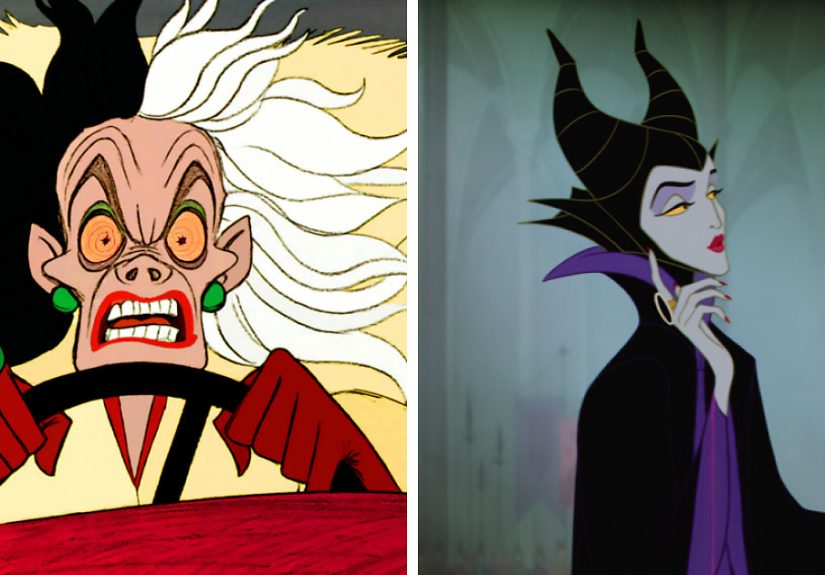
- Maleficent Sleeping Beauty. She cursed a baby because she didn’t get invited to a party. That level of dramatic overreaction is honestly legendary.
- Cruella de Vil 101 Dalmatians. There are bad ideas, and then there is “I would like to turn puppies into fashion.” Cruella remains one of Disney’s most instantly recognizable brands of evil.
Petty royals, magical creeps, and power-hungry schemers
- Madam Mim The Sword in the Stone. She’s gleefully nasty, wildly competitive, and basically a magical gremlin who treats sportsmanship as a personal insult.
- Shere Khan The Jungle Book. Cool, calm, and predatory, Shere Khan proves that villains do not need to shout when a silky voice and lethal confidence will do.
- Prince John Robin Hood. He’s spoiled, greedy, insecure, and hilariously pathetic. Somehow, sucking his thumb only makes him more annoying.
- The Sheriff of Nottingham Robin Hood. If tax collection had a mascot for corruption, it would be this smirking wolf.
- Madame Medusa The Rescuers. She is one of Disney’s most underrated human villains: selfish, explosive, and perfectly willing to endanger a child for a diamond.
- The Horned King The Black Cauldron. Less “cartoon bad guy,” more “walking dark-fantasy threat.” He feels like a villain who wandered in from a haunted medieval fever dream.
- Professor Ratigan The Great Mouse Detective. Brilliant, theatrical, and deeply unstable, Ratigan is what happens when ego gets a villain song and a tailored coat.
- Sykes Oliver & Company. He’s not flashy, which somehow makes him meaner. Sykes has pure crime-boss energy and no patience for sentiment.
- Ursula The Little Mermaid. She weaponizes contracts, flattery, and false promises. In other words, she is the patron saint of “Please read the fine print.”
- Gaston Beauty and the Beast. Disney understood early that vanity mixed with entitlement is a dangerous combo. Gaston is basically weaponized smugness with biceps.
The Disney Renaissance gave evil a microphone
- Jafar Aladdin. Snake staff, royal scheming, dramatic beard, zero chill. Jafar doesn’t merely want power; he wants the whole room to know he deserves it.
- Iago Aladdin. A shouty accomplice with the soul of an irritated car alarm. He’s funny, but he’s still fully committed to villain employment.
- Scar The Lion King. Scar is Disney betrayal in its purest form. He’s witty, elegant, lazy, bitter, and willing to destroy both family and kingdom for the throne.
- Governor Ratcliffe Pocahontas. Greed with a powdered wig. Ratcliffe turns prejudice and gold fever into a full-blown personality disorder.
- Judge Claude Frollo The Hunchback of Notre Dame. Easily one of Disney’s darkest villains, Frollo is terrifying because he wraps cruelty in righteousness and calls it virtue.
- Hades Hercules. Fast-talking and funny, yes, but still a god of the dead running a cosmic coup with all the patience of a man trapped in traffic forever.
- Shan Yu Mulan. A straight-up warlord with almost no comic cushioning. His menace is direct, efficient, and deeply unsettling.
- Clayton Tarzan. He presents himself like a civilized gentleman and then reveals the soul of a ruthless poacher. Bad manners in a safari vest.
- Yzma The Emperor’s New Groove. She is camp, chaos, revenge, eyeliner, and questionable potion storage. Somehow incompetent and iconic at the same time.
- Captain Gantu Lilo & Stitch. Bulky, authoritarian, and allergic to empathy, Gantu gives “I read the rules and missed the point completely.”
Modern Disney villains, twisty manipulators, and shiny liars
- Alameda Slim Home on the Range. A cattle rustler who uses yodeling to commit crimes. You have to respect the weirdness even while condemning the man.
- Dr. Facilier The Princess and the Frog. Charm is his weapon, deals are his hobby, and consequences are everyone else’s problem. A top-tier smooth talker with bottom-tier intentions.
- Mother Gothel Tangled. One of Disney’s most effective manipulators because she disguises abuse as care. Her villainy is psychological, selfish, and deeply controlling.
- King Candy / Turbo Wreck-It Ralph. Sugary on the outside, rotten at the core. He is proof that cheerful presentation can hide some truly chaotic software-level villainy.
- Prince Hans Frozen. The smiling opportunist. Hans weaponizes charm, performs sincerity, and then goes full ambition monster when the door opens.
- Professor Callaghan / Yokai Big Hero 6. A tragic backstory does not erase the fact that grief pushes him into dangerous, destructive obsession.
- Bellwether Zootopia. Cute voice, tiny frame, huge agenda. Bellwether turns underestimation into a strategic advantage, which makes her twist hit harder.
- Tamatoa Moana. Greedy, vain, and determined to accessorize his entire body with stolen shiny things. He’s ridiculous, but also magnificently selfish.
- King Magnifico Wish. A ruler who begins with charisma and ends in control-freak paranoia, proving once again that unchecked admiration can curdle into tyranny.
- Chernabog Fantasia. He barely needs dialogue. Chernabog is pure visual dread, a towering embodiment of nightmarish evil.
Disney-adjacent icons from Pixar and beyond
- Oogie Boogie The Nightmare Before Christmas. A gambling, singing sack of bugs who turns torture into a party trick. Delightful? Sure. Also horrifying? Absolutely.
- Judge Doom Who Framed Roger Rabbit. Nightmare fuel in human form. The cheerful cruelty makes him worse, not better.
- Syndrome The Incredibles. He starts as a rejected fan and evolves into a billionaire-grade revenge machine. Petty resentment has rarely been so well funded.
- Randall Boggs Monsters, Inc.. Slippery, jealous, and always lurking. Randall has the energy of a coworker who absolutely forwards your emails to management.
- Sid Phillips Toy Story. Childhood chaos, but the truly unsettling kind. Sid is the kid equivalent of “maybe don’t go in that basement.”
- Hopper A Bug’s Life. A bully who rules through fear and scarcity, Hopper is one of Pixar’s most straightforwardly effective tyrants.
- AUTO WALL-E. The wheel may be small, but the authoritarian vibes are enormous. AUTO is what happens when convenience grows teeth.
- Charles Muntz Up. Once admired, eventually consumed by obsession. Muntz is a cautionary tale about genius, ego, and losing the plot literally in the clouds.
- Lotso Toy Story 3. A pink teddy bear should not be this sinister, and yet here we are. Lotso turns hurt feelings into a prison system.
- Ernesto de la Cruz Coco. Charming celebrity on the outside, ruthless fraud on the inside. The smile is polished, the betrayal is ice-cold.
What These Disney Villains Reveal About Great Storytelling
There’s a reason Disney villains still dominate pop-culture conversations. They sharpen the hero, raise the stakes, and give stories their necessary crackle. More importantly, they package big moral ideas in unforgettable forms. Vanity becomes the Evil Queen. Manipulation becomes Mother Gothel. Entitlement becomes Gaston. Jealous ambition becomes Scar. Corrupt moral certainty becomes Frollo. Disney has always been very good at turning ugly human impulses into characters you can spot from a silhouette.
The strongest villains are also entertaining. They are not random obstacles dropped into a plot like traffic cones. They have style, rhythm, perspective, and a slightly alarming commitment to the bit. Even when they are monstrous, they are rarely boring. And in family storytelling, boring is the one crime audiences never forgive.
That’s why these antagonists outlive their films. Their songs go viral again. Their quotes become shorthand. Their looks inspire makeup tutorials, runway collections, and Halloween aisles full of horns, hooks, canes, cloaks, and wickedly arched eyebrows. The heroes may save the day, but the villains often own the memory.
The Experience of Growing Up With Disney Villains
If you grew up watching Disney movies, there’s a good chance your relationship with the villains changed as you got older. As a kid, they were simple nightmare fuel. Maleficent was terrifying because she looked terrifying. Ursula was scary because she could talk someone into ruining their own life. Scar felt especially evil because he committed the unforgivable childhood sin of hurting the family. You didn’t need nuance. You just knew who the bad guy was, and you waited nervously for the hero to survive them.
Then adulthood arrives, and suddenly Disney villains become a weirdly fascinating mirror. You rewatch Cinderella and realize Lady Tremaine is chilling not because she has magical powers, but because emotional manipulation feels real. You revisit Tangled and understand that Mother Gothel’s gaslighting is far more disturbing than any dragon or curse. You hear Gaston talk and think, “Ah, yes, I have met this man in a group project.” Disney villains age with the audience because the fears change. As children, we fear monsters. As adults, we fear narcissists, frauds, bullies, opportunists, and people who smile while doing terrible things.
There is also the performance factor. Watching Disney villains is simply fun. They usually get the biggest gestures, the sharpest comic timing, the most extra costumes, and the songs that sound like they were written by someone who fully understood the assignment. No one remembers a villain because they were quiet and reasonable. We remember them because they entered the frame like they were arriving for an awards show hosted in a thunderstorm.
That shared experience matters. People from different generations can still swap favorite villains almost instantly. One person says Ursula; another says Scar; someone else insists Frollo is the scariest because he feels too real. It becomes a conversation about fear, taste, humor, design, music, and memory all at once. Disney villains are not just plot devices. They are emotional landmarks. They remind us where we were when a scene first shocked us, made us laugh, or made us yell at the screen.
And maybe that is the strangest compliment you can give a villain: they help define the comfort of the movie they are trying to ruin. Their wickedness makes the eventual triumph sweeter. Their spectacle makes the journey bigger. Their despicable choices make the lessons clearer. We don’t love Disney villains because we approve of them. We love them because they are so spectacularly, creatively, unmistakably awful that the stories would feel smaller without them. They are the storm clouds around the castle, the green fire in the hallway, the poisoned apple on the table, the suspicious contract with microscopic print. In other words, they are a huge part of the reason Disney stories still feel magical.
Conclusion
From the Evil Queen’s poison apple to Ernesto de la Cruz’s polished betrayal, Disney villains have spent decades proving that being bad is an art form. The greatest among them are more than obstacles for heroes. They are pop-culture institutions: stylish, quotable, dramatic, and often just a little too good at making evil look entertaining. Whether you prefer the gothic terror of Maleficent, the manipulative brilliance of Ursula, the bitterness of Scar, or the icy realism of Frollo and Lady Tremaine, one thing is clear: Disney has built one of the deepest villain benches in entertainment history. Thankfully for audiences, these despicable characters remain impossible to forget.