Table of Contents >> Show >> Hide
- Why This Quiz Format Is So Weirdly Addictive
- How To Score At Least 24/32 Without Throwing Your Laptop Across The Room
- From Nirvana To Queen: Why These Band Names Are Perfect Quiz Material
- What A 24/32 Score Actually Means
- The Best Strategy Is Half Logic, Half Vibe
- Common Mistakes That Sink Otherwise Good Scores
- The Experience Of Taking A Quiz Like This Is Half The Fun
- Conclusion
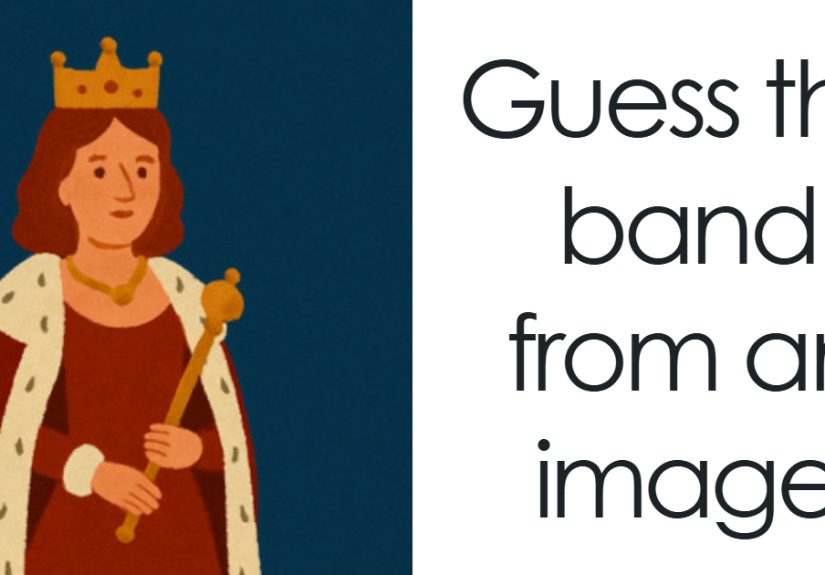
There are two kinds of people in this world: the ones who see a crown and immediately think Queen, and the ones who stare at it for 45 seconds before blurting out, “Uh… Royal Hats?” This article is for both groups.
A band-name picture quiz sounds simple at first. How hard could it be? You look at an image, match it to a name, type the answer, and move on with your life feeling either brilliant or betrayed. Then the quiz throws something sneaky at you. A pile of rocks in motion. A green calendar square. A human head with radio waves. Suddenly you are no longer a casual music fan. You are a detective in a leather jacket, whispering song titles to yourself like they are clues in a tiny, melodramatic crime scene.
That is exactly why this kind of challenge works so well. A literal picture-of-the-name quiz lives at the intersection of pop culture, memory, visual wordplay, and music fandom. It rewards people who know famous bands, but it also rewards people who know how to think sideways. To score at least 24 out of 32, you do not need magical hearing powers or a vinyl collection so heavy it threatens your floorboards. You need pattern recognition, a decent sense of humor, and enough music literacy to tell the difference between an iconic band name and a random object your brain is trying to overcomplicate.
Why This Quiz Format Is So Weirdly Addictive
Band-name picture quizzes are basically rebus puzzles wearing concert tees. They ask your brain to translate an image into a word, then connect that word to something stored in pop-culture memory. That is a satisfying little mental leap, and your brain loves those. When the answer clicks, it feels instant and obvious, which is both delightful and mildly rude. Five seconds earlier you were confused; now you are offended that the puzzle ever doubted you.
Music also gives these quizzes an extra kick. Unlike a generic word puzzle, a band-name challenge comes loaded with associations. You do not just recognize Nirvana as a word. You connect it to a whole world of sound, attitude, album covers, interviews, T-shirts, and the emotional weather of a particular era. The same goes for Queen, Green Day, The Rolling Stones, or Radiohead. These names are not empty labels. They carry personality. That makes them easier to visualize and harder to forget.
There is also a social factor. Quizzes like this are perfect for arguing with friends, siblings, parents, coworkers, or that one person in the group chat who insists they “listen to everything” and then fails to identify Eagles from a picture of, well, eagles. Band quizzes are sneaky little personality tests. They reveal whether someone knows classic rock, alt-rock, pop-punk, indie staples, or just has a gift for decoding visual nonsense under pressure.
How To Score At Least 24/32 Without Throwing Your Laptop Across The Room
Start With The Most Literal Meaning
The biggest mistake people make is assuming every clue is too clever for them. Often, it is not. If the picture shows a queen, the answer may genuinely be Queen. If it shows stones rolling, you should probably not start by guessing an obscure prog band from 1974. Literal band-name quizzes are at their best when they are playful, not impossible. Begin with the obvious noun or phrase before inventing a conspiracy board in your head.
Break The Image Into Pieces
Some answers are single-word bands, but plenty of clues split into parts. A radio plus a head can become Radiohead. A green object plus a day-related image can nudge you toward Green Day. A clue might also use color, motion, repetition, or mood. The trick is to stop seeing one whole picture and start seeing word components. Once you do that, the puzzle becomes much less mystical and much more manageable.
Use Music Popularity To Your Advantage
If you are staring at a clue and two answers seem possible, choose the more famous band. In a mainstream 32-question music quiz, the creators are usually not trying to make you identify a band that only released one album and played three basement shows in 1998. They are aiming for names with cultural reach. That is why bands like Nirvana, Queen, The Rolling Stones, and Green Day are such strong quiz material: the names are memorable, and the bands are instantly recognizable across generations.
Do Not Get Tripped Up By Tiny Words
Articles like “the” can be the banana peel of band quizzes. Some people type Police; the quiz expects The Police. Some type Rolling Stones; the official answer might want The Rolling Stones. Annoying? Absolutely. Predictable? Also yes. If a band is commonly known with “the,” it is worth mentally keeping both versions ready. Trivia can be joyful, but it also occasionally behaves like a parking ticket.
From Nirvana To Queen: Why These Band Names Are Perfect Quiz Material
Nirvana is a great example of a clue that feels simple but can still trip people up. The word suggests peace, release, calm, or bliss. That makes it visually less concrete than, say, a crown or a police badge. But the band name is so famous that even an abstract image can still steer a music fan in the right direction. It is an ideal “think for a second, then grin” answer.
Queen, on the other hand, is quiz gold. It is regal, direct, and instantly visual. You can represent it with a crown, a throne, a monarch, or almost anything royal. The band itself also has towering recognition, which makes the clue feel satisfying instead of obscure. This is the kind of answer that makes players feel smart even when the puzzle is practically waving from a castle balcony.
The Rolling Stones works because the name is both vivid and active. You can picture stones. You can picture them rolling. Boom: classic-rock clue achieved. Green Day is a little trickier because color-based clues can look generic, but once the player sees “green” plus anything tied to a day, the answer starts to glow. Radiohead succeeds because it sounds odd enough to be memorable and literal enough to visualize. The best band names for this format live in that sweet spot: familiar, image-friendly, and just a little ridiculous when taken at face value.
That is the fun of the whole thing. Many great band names were never meant to be translated into clip-art logic, yet once you do it, they feel weirdly inevitable. You realize how much music culture depends on memorable naming. A strong band name is not just branding. It is a mental hook. It sticks, and in a quiz like this, stickiness is everything.
What A 24/32 Score Actually Means
Let us do the math without making it boring: 24 out of 32 is 75 percent. In quiz terms, that is not “I got lucky.” That is “I know my stuff.” Scoring at least 24 means you are consistently identifying the logic of the clues and matching them to bands with confidence. You are not just recognizing objects. You are translating visual hints into shared music knowledge, which is a very specific and very entertaining superpower.
It also suggests range. To hit 24, you probably need more than one musical lane. You may know classic-rock giants, alternative icons, and a few modern crossover names. That breadth matters because picture quizzes tend to mix obvious legends with slightly less immediate answers. A strong score means your brain can move from glam to grunge, from punk to art-rock, without needing a halftime pep talk.
And no, you do not need a perfect 32 to win imaginary bragging rights. In fact, a perfect score often requires a weirdly specific mix of music knowledge, puzzle instincts, and tolerance for clue design. Sometimes the problem is not you. Sometimes the clue artist has made “green” look suspiciously gray, and now the whole room is spiraling. That is not failure. That is trivia chaos.
The Best Strategy Is Half Logic, Half Vibe
Pure logic helps, but vibe matters too. If an answer feels too plain, too elegant, or too famous, it is often correct. Quiz writers love answers that make players slap the table and say, “Oh, come on.” That reaction is not accidental. It is the engine of the genre. You miss the clue, then suddenly see it, and for one glorious second your brain experiences both humiliation and triumph. Entertainment has many forms. This one just happens to involve misidentifying a throne as furniture.
It helps to think about how band names sound in everyday language. Queen sounds concrete. Nirvana sounds abstract. The Rolling Stones sounds like an action shot. Radiohead sounds like a surreal object. That sound-shape relationship gives you hints before you even lock in the answer. The best solvers are not just reading images; they are hearing names in their heads and testing which one fits.
Common Mistakes That Sink Otherwise Good Scores
Overthinking is public enemy number one. Public enemy number two is underthinking. If you guess the first band that matches one part of the image and ignore the rest, you can talk yourself into nonsense. A red pepper does not automatically mean Red Hot Chili Peppers unless the rest of the clue backs it up. On the other hand, if you refuse to believe a queen is Queen because that seems too easy, congratulations: you have outsmarted yourself.
Another trap is generational blind spots. Someone who knows every word to ’90s alt-rock staples may stumble on older arena-rock bands. A classic-rock encyclopedia might blank on pop-punk or indie names. That is why these quizzes are fun rather than merely difficult: they expose what kind of music fan you are. Your wrong answers tell a story too, and sometimes that story is, “I have excellent taste but terrible rebus instincts.”
The Experience Of Taking A Quiz Like This Is Half The Fun
There is a specific kind of joy that comes from taking a band-name picture quiz, and it has almost nothing to do with being perfect. It starts with confidence. You click into the first question thinking, “Please, I was built for this.” Then the second clue makes you feel like you have never heard music before. That emotional whiplash is part of the charm. These quizzes turn music fandom into a game show that happens entirely inside your head, complete with imaginary applause and the occasional imaginary booing.
They are even better with other people. One person sees a crown and shouts Queen. Another sees the same image and somehow says King Crimson, which is deeply wrong but wonderfully bold. Somebody’s parent suddenly becomes unbeatable at classic-rock clues. Somebody younger flies through modern names and then freezes at a clue that feels obvious to everyone over forty. Within minutes, the room turns into a tiny cultural summit, except instead of solving world problems, everyone is debating whether a green calendar square counts as fair game.
What makes the experience memorable is how quickly it becomes personal. Every answer opens a little door in your memory. A correct guess might remind you of an old playlist, a concert shirt, a sibling who played the same album on repeat, or a song that lived in your car stereo for one entire summer. These are not just puzzle answers. They are memory triggers dressed up as trivia. That is why even the wrong guesses can be fun. A clue might not lead you to the intended band, but it can still send you down a side road of music nostalgia, and honestly, that is not a bad detour.
There is also something funny about seeing beloved band names made literal. Rock and pop have always relied on image, myth, attitude, and style. A quiz like this strips all of that away and says, “Fine. Here is your band name as an object. Deal with it.” It is delightfully silly. It reminds you that even iconic names can look absurd when translated into plain visuals. And yet that absurdity is exactly what makes them memorable. A strong name survives glamour, parody, and puzzle logic. That is a kind of durability.
My favorite part of these quizzes is the moment right before the answer lands. You are hovering between confusion and certainty, and then suddenly the pieces line up. The image is not random anymore. It is a band, a sound, a whole chunk of cultural memory. That tiny flash of recognition is ridiculously satisfying. It is the same reason people love crosswords, word games, and musical trivia nights. You get a little burst of order out of chaos. You make meaning out of fragments. You feel clever, even if only for ten seconds, and ten seconds is plenty.
So yes, chasing 24 out of 32 is absolutely worth it. Not because the number itself is magical, but because it is a sweet spot. It is strong enough to feel impressive and attainable enough to keep the game fun. It says you know your bands, trust your instincts, and can survive a little visual nonsense without folding like a lawn chair. And if you miss a few? That just gives you an excuse to argue, laugh, replay the quiz, and maybe build a better playlist afterward. Not every hobby needs to be profound. Sometimes it is enough to recognize a queen, decode a nirvana, and walk away feeling like the champion of extremely specific chaos.
Conclusion
“From Nirvana To Queen”: identifying a band from a literal picture of its name is such a satisfying challenge because it turns music knowledge into visible, playful problem-solving. The best players are not just fans of famous bands; they are quick translators of symbols, tone, and pop-culture memory. If you can score at least 24 out of 32, you are doing more than guessing. You are proving that your brain can connect image, language, and music history on the fly. That is a neat trick, even if one clue still has you irrationally angry.